Walford Nursery & Primary School
Progression in Science: Physics
Science National Curriculum
Progression in Physics
Subject Key Objective Progression & Development by Year Group
The following is a guide to help you understand your child's progression through school.
All lessons are effectively differentiated to ensure that all children can achieve the objective set.
Physics Knowledge - EYFS
In Nursery, children will:
- I can explore how things work;
- I can explore and talk about different forces I can feel.
In Reception, children will:
- I understand the effect of changing seasons on the natural world around them.
Physics Knowledge - Year 1
In Year 1, children will:
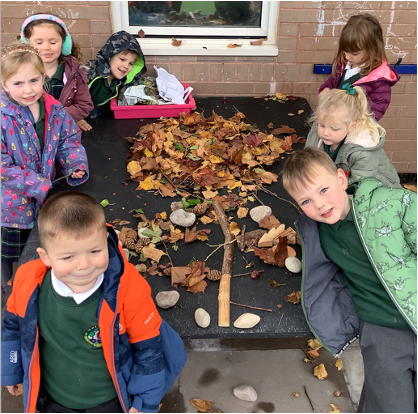
- name the seasons;
- know about the type of weather in each season;
- describe how day length varies.
Physics Knowledge - Year 3
In Year 3, children will:
- know about and can describe how objects move on different surfaces;
- know how some forces require contact and others work at a distance (such as magnets);
- observe how magnets attract and repel (and other materials);
- predict whether magnets will attract or repel based on direction of poles;
- compare & group together everyday materials based on whether they are attracted to magnet & identify some magnetic materials;
- describe magnets as having two different poles;
- recognise that we need light in order to see things and that dark is the absence of light;
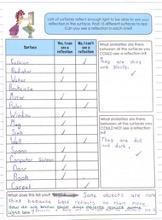
- notice that light is reflected from surfaces;
- recognise that light from the sun can be dangerous and that there are ways to protect my eyes;
- recognise that shadows are formed when the light from a light source is blocked by an opaque object;
- find patterns in the way that the size of shadows change.
Physics Knowledge - Year 4
In Year 4, children will:
- identify and name appliances that require electricity to function;
- construct a simple series circuit;
- identify and name the components in a series circuit (including cells, wires, bulbs, switches and buzzers);
- predict and test whether a lamp will light within a circuit (is it complete?);
- know the function of a switch and therefore whether a lamp lights in a simple circuit;
- know the difference between a conductor and an insulator; recognise metals as good conductors;
- know how sound is made, associating some of them with vibrating;
- know how sound travels from a source to our ears;
- find the patterns between pitch and the feature of the object producing a sound;
- find the patterns between the volume of a sound and the strength of the vibrations that produced it;
- know the link between how loud a sound is and the distance from the object making that sound.
Physics Knowledge - Year 5
In Year 5, children will:
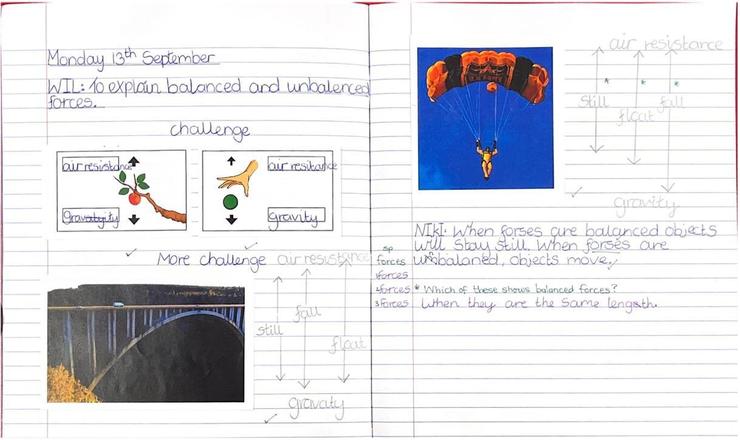
- know what gravity is and the fact that it acts between things on Earth and the falling object;
- identify the effect of air and water resistance between moving surfaces;
- identify the effect of friction between moving surfaces;
- recognise that some mechanisms, including levers, pulleys and gears allow a smaller force to have a greater effect;
- know about and can explain the movement of the Earth and other planets relative to the Sun;
- know about and can explain the movement of the Moon relative to the Earth;
- know and can demonstrate how night and day are created using terms such as rotation;
- explain why the sun looks like it moves across the sky;
- describe the Sun, Earth and Moon (using the term spherical).
Physics Knowledge - Year 6
In Year 6, children will:
- compare and give reasons for variations in how components function, including the brightness of bulbs, the loudness of buzzers and on/off position of switches;
- draw circuit diagrams using correct symbols;
- know how the number and voltage of cells in a circuit links to the brightness of a lamp or the volume of a buzzer;
- recognise that light appears to travel in straight lines;
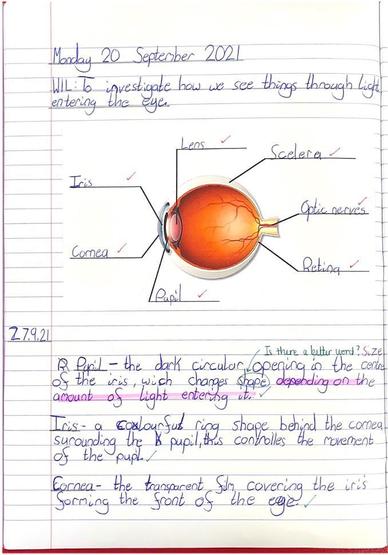
- explain that we see things because light travels from light sources to our eyes or from light sources to objects and then to our eyes;
- use the idea of light travelling in straight lines to explain why shadows have the same shape as the objects that cast them;
- use the idea that light travels in straight lines to explain that objects are seen because they give out or reflect light into the eye.